A busy Saturday morning can make a cheap card machine look expensive very quickly if it loses connection, takes too long to print receipts, or does not suit the way your staff work. So, how much does a card machine cost? For most independent businesses, the upfront device price is only one part of the answer. The ongoing transaction rate, any monthly software fees, and the time saved at the counter can matter far more over a year.
A simple card reader may cost from around £30 to £80, while a standalone touchscreen terminal or a more advanced payment and point-of-sale setup can cost £100 to several hundred pounds. What you pay should reflect what the machine needs to do for your business, not simply the lowest price on the shelf.
What determines how much a card machine costs?
Card machine pricing usually has three parts: the hardware, the fee taken from each card payment, and any optional monthly services. Some providers sell a terminal outright with no contract or monthly charge. Others offer a lower device price but charge for a service plan, receipt printing, point-of-sale software, or additional features.
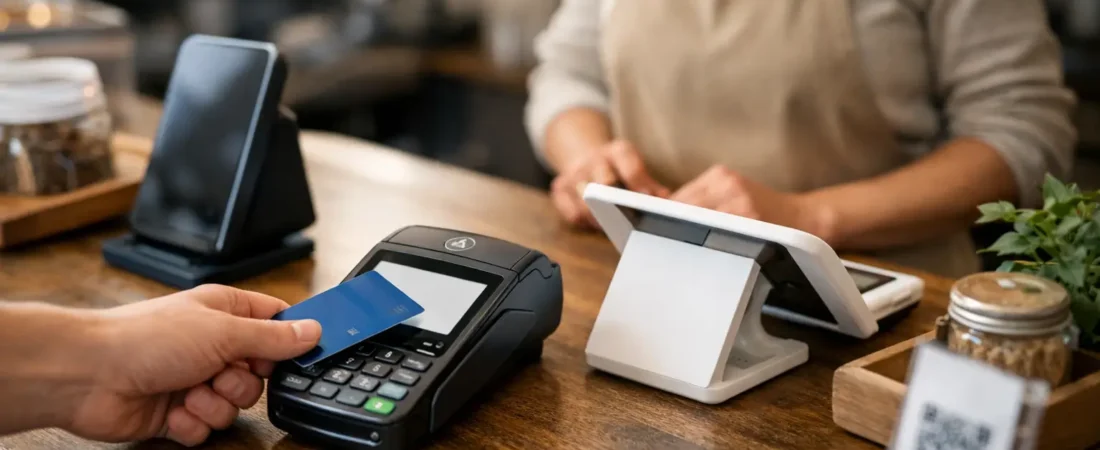
For a tradesperson taking a few payments each week, a compact reader connected to a phone may be enough. A coffee shop handling a morning rush may benefit from a standalone terminal with its own mobile connection, so staff are not relying on a personal phone or the customer-facing Wi-Fi. A restaurant may need several handheld devices linked to an EPOS system, table management, and kitchen printing.
The right question is not just, “What does the machine cost?” It is, “What will it cost to take payments reliably in the way my customers expect?”
The upfront price of the terminal
Entry-level card readers are generally the lowest-cost option. They are small, portable, and often connect by Bluetooth to a smartphone or tablet. They can be a sensible choice for market traders, mobile beauticians, tradespeople, and businesses that only take cards occasionally.
Standalone card terminals cost more because they have their own screen, battery, and internet connection. They are often easier for a counter-based business because staff can pick them up and take a payment without opening an app on a phone. Models with a built-in printer may cost more again, although many customers are happy with a digital receipt.
A full EPOS setup has a wider price range. It may include a tablet or touchscreen, cash drawer, receipt printer, barcode scanner, customer display, and card terminal. This is a larger investment, but it can replace separate systems and reduce manual work for a retail store, café, salon, or pub.
Card transaction fees are the ongoing cost
Every time a customer pays by card, the payment provider takes a percentage of the sale. For small businesses using straightforward pay-as-you-go pricing, in-person card rates are commonly around 1.5% to 2%, although rates and terms vary by provider and card type.
That percentage can be more significant than the price of the device. A business taking £2,000 in card payments each month at a 1.69% rate would pay about £33.80 in processing fees. At £10,000 a month, the same rate would be about £169. Looking at your actual card turnover is the quickest way to see whether a different pricing structure could be worthwhile.
Some providers offer custom rates for businesses with higher or more predictable card sales. This can reduce the percentage per transaction, but it may involve a monthly fee, a contract, or a minimum volume. It is worth comparing the total cost rather than assuming that a lower transaction rate always means a cheaper deal.
Typical card machine costs at a glance
The figures below are useful planning ranges rather than fixed prices. Devices, offers, and transaction rates can change.
| Setup type | Typical upfront cost | Usually suits | Ongoing costs to check | |—|—:|—|—| | Basic card reader | £30-£80 | Mobile businesses and occasional payments | Transaction rate, phone data connection | | Standalone terminal | £80-£200 | Shops, salons, cafés, and service counters | Transaction rate, mobile data, receipt options | | Printer-equipped terminal | £150-£300 | Hospitality or businesses needing paper receipts | Transaction rate, paper rolls, data plan if applicable | | EPOS and payment setup | £300-£1,500+ | Businesses managing stock, tables, bookings, or staff sales | Software subscription, extra hardware, transaction rate |
A price range is more useful than a single figure because the same business can have very different needs. A bakery with one till may only need a reliable countertop terminal. A growing café with two ordering points and seasonal staff may find that an EPOS system pays for itself through clearer orders, faster service, and simpler reporting.
Watch for costs beyond the machine
A low hardware price is attractive, but it should not be the only comparison. Before choosing a provider, check whether there are charges for refunds, chargebacks, settlement timing, SIM data, replacement devices, or adding more users and locations.
Also consider how you take payments away from the counter. Payment links, QR code payments, online checkout, invoices, and deposits can each have different rates or features. For example, a hotel or guest house may want to take a deposit before arrival, while a plumber may prefer to send an invoice payment link after completing a job.
Monthly point-of-sale software is another common cost. It can be good value when it replaces manual stock counts, handwritten orders, loyalty cards, or separate booking tools. It is less useful if you only need to accept the occasional contactless payment. Pay for features that solve a real operational problem, not features that will sit unused.
How to compare card machine costs properly
Start with the last three to six months of card sales. Note your average monthly card turnover, the average transaction value, and the busiest times of day. This gives you a realistic base for comparing rates and hardware.
Then think about the customer journey. If customers queue at a counter, speed and battery life may matter most. If you work on-site, mobile signal and portability are likely to be more important. If customers order at tables or book appointments, connected EPOS and payment tools may save staff time and reduce errors.
When comparing quotations or online prices, ask these practical questions:
- Is there a monthly charge, minimum term, or cancellation fee?
- What transaction rate applies to in-person, online, and payment-link sales?
- Does the terminal work over Wi-Fi and mobile data, and is data included?
- Can it connect to the EPOS, printer, booking, or loyalty tools you already use?
- How quickly do funds reach your business account?
These details make it easier to compare like with like. A £49 reader with a higher transaction rate may be sensible for a low-volume business. A more complete setup with a monthly cost may make better sense for a restaurant processing thousands of pounds in card payments every week.
When the cheapest option is not the lowest-cost option
Consider a salon with three stylists sharing one basic card reader. The device itself may be inexpensive, but clients could be waiting while a staff member finds the phone it is paired with, checks the connection, or manually records each payment. A second standalone terminal or a simple EPOS setup costs more at the beginning, yet it may improve the checkout experience and make daily reconciliation easier.
The same applies to payment reporting. If you spend an hour every evening matching card receipts to sales, a system that brings those figures together can be valuable. The saving is not only money. It is time that can go back into serving customers, managing staff, or planning the next day.
That said, there is no need to overbuy. A single-location florist, market stall, or trades business may be well served by a straightforward terminal with transparent pay-as-you-go pricing. The aim is a dependable setup that fits the business you run now and can adapt if it grows.
A practical way to set your budget
Set a budget in two parts: an upfront amount for equipment and a monthly estimate for processing fees and software. Avoid focusing solely on the purchase price. A card machine is part of your payment operation, and its real value comes from reliable payments, clear records, and a checkout process that works for staff and customers.
If you run an independent business in Dorset or the wider South West and would like a second opinion, Richard Bradley can review your current card costs and payment setup with you. A free, no-obligation conversation can help you decide whether to keep things simple, reduce unnecessary costs, or choose technology that better supports the way you work.

Let’s Talk About Your Business
Hi, I’m Richard Bradley, your local SumUp Business Partner .
I help independent businesses across Dorset reduce card payment costs, choose the right card machines and EPOS systems, and receive honest, local advice.
Questions about this article? Looking to reduce your card payment costs? Book your free, no-obligation payment review today.
✓ Local Dorset Business Partner ✓ Free Payment Review ✓ No Obligation
Book Your Free Payment Review