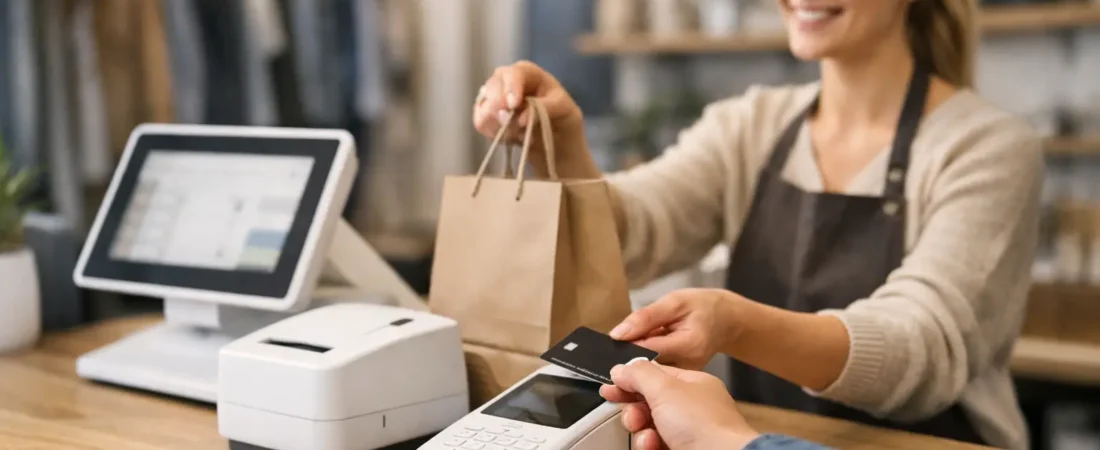
A customer reaches the counter, taps their card, and expects the payment to be finished in seconds. For an independent business, however, retail payment solutions need to do more than take money. They should help staff serve people faster, reduce avoidable mistakes, show what is selling, and make day-to-day administration less of a burden.
The right setup depends on how your business operates. A coffee shop with a busy morning rush has different needs from a boutique, salon, farm shop, pub, or guest house. The aim is not to add technology for its own sake. It is to choose practical tools that suit your counter, your team, and the way customers prefer to pay.
What retail payment solutions should do for a small business
A basic card terminal may be enough for a tradesperson or a small service business taking occasional payments. It allows customers to pay by contactless card, phone, or other accepted methods without handling cash or chasing bank transfers. Portable terminals can also be useful where payments happen away from a fixed counter, such as at a table, in a treatment room, or at a customer’s premises.
For a business processing regular sales, payments work best when they connect with the wider operation. An integrated point-of-sale system can send the sale total directly to the card terminal. That removes the need for staff to key in the amount twice, which can reduce entry errors and keep queues moving.
A suitable system should also make it easier to see the money coming into the business. Clear sales reports, payment records, and payout information give owners a more accurate view of trading. Same-day payouts, including weekends and bank holidays where available, can be particularly helpful for businesses managing stock orders, wages, and other regular costs.
Choosing retail payment solutions around your workflow
Start with the customer journey rather than a list of features. Think about where an order begins, who takes it, where it is prepared or completed, and how payment is collected. A checkout that looks impressive but creates extra steps for staff is unlikely to save time.
A small retail store may benefit from a countertop terminal and a simple register that records items, discounts, and returns. This can make it easier to track popular lines and spot stock that is not moving. A salon may need appointment-related payments, product sales, and a portable terminal for taking deposits or final balances away from reception.
In hospitality, the pressure points are often different. Restaurants and pubs may want staff to take orders at the table, send them directly to the kitchen, and take payment without customers returning to a central till. Handheld ordering, kitchen displays or printers, table management, and split-bill functions can all save time when they match the service style.
Before choosing a setup, consider four practical questions:
- How many payments do you take on a normal busy day, and where do they happen?
- Do staff re-enter prices or totals between systems?
- Which reports do you currently need to prepare by hand?
- Would stock, table, customer, or sales information help you make better decisions?
The answers often show whether a straightforward payment terminal is sufficient or whether an EPOS setup would remove repeated work. It is sensible to avoid paying for functions that will sit unused. Equally, choosing only on the upfront cost can be limiting if staff are still spending hours each week on manual tasks.
Retail payment solutions and the real cost of taking payments
Card processing pricing matters, especially when margins are tight. The clearest approach is to understand the rate charged for the cards you accept, any hardware costs, and whether there are ongoing software charges for EPOS features. This makes it easier to compare the likely monthly cost against the time the system could save.
Cost should not be judged by transaction fees alone. If an integrated system avoids incorrect totals, speeds up a lunchtime queue, or reduces end-of-day reconciliation, it can have value beyond the payment rate. A system that gives a clear record of sales may also make conversations with your accountant more straightforward, although your accountant remains the right person to advise on bookkeeping and tax treatment.
Cash flow is another consideration. Knowing when funds will reach your account helps with planning. For some independent businesses, access to eligible card takings on the same day can be more useful than a marginal difference in processing cost. The right balance depends on the volume and timing of your payments.
Features worth considering without overcomplicating things
Modern systems can cover much more than a card transaction. The useful features are the ones that solve a daily problem in your business.
For example, payment links can help a guest house collect a deposit before arrival, or allow a service business to request payment without taking card details over the phone. QR payments may suit a counter display, event stall, or invoice. Customer loyalty tools can give regular customers a reason to return, particularly for cafés, salons, and local shops.
Sales reporting can reveal patterns that are difficult to spot during a busy week. A bakery may see which products sell out before noon. A pub may identify its strongest trading periods. A retailer may notice whether a promotion actually increased sales or simply reduced margin. The report is only useful if it is easy to understand and reviewed regularly.
Stock control is valuable when it reflects reality. If items are scanned or selected correctly at the point of sale, owners can see what needs reordering and reduce time spent checking shelves manually. However, stock tools require consistent setup and staff habits. A simple, well-maintained product list is generally more useful than a highly detailed system no one keeps up to date.
Installation and staff confidence matter
Even a well-chosen system can disappoint if it is rushed into service. Installation should include setting up products, payment devices, receipt preferences, staff access, and the reports you will genuinely use. For hospitality businesses, it may also include tables, menus, kitchen routing, and printers or displays.
Staff training is not an optional extra. Employees need to know how to process a sale, correct a mistake, issue a refund where appropriate, close a shift, and find help when something does not look right. A short practical session using your own menu, prices, or products is usually more effective than handing over a generic instruction sheet.
It also helps to have support after installation. Questions often arise once the business is using the system during a real rush, not while it is being demonstrated. Local, face-to-face help can be reassuring for owners who do not have time to spend an afternoon on hold or trying to interpret technical settings.
A practical review before you change anything
If your current terminal and EPOS setup work reasonably well, there may be no reason to replace everything at once. Sometimes a portable card reader, better reporting, or a connection between payments and the register is enough to improve the process. In other cases, an older setup is creating enough repeated work that a broader change makes sense.
A useful review looks at your current payment costs, how staff take orders and payments, the reports you need, and where errors or delays occur. It should lead to a recommendation that fits your business, not a one-size-fits-all package.
Richard Bradley at Dorset Business Hub can provide a friendly, no-obligation review of your current payment or EPOS setup, including demonstrations, installation, staff training, and ongoing support. Call 07377 625228 or use the Dorset Business Hub contact page to start the conversation. The most useful payment setup is the one that quietly makes every working day easier for you, your team, and your customers.

Let’s Talk About Your Business
Hi, I’m Richard Bradley, your local SumUp Business Partner .
I help independent businesses across Dorset reduce card payment costs, choose the right card machines and EPOS systems, and receive honest, local advice.
Questions about this article? Looking to reduce your card payment costs? Book your free, no-obligation payment review today.
✓ Local Dorset Business Partner ✓ Free Payment Review ✓ No Obligation
Book Your Free Payment Review