A packed Friday evening quickly exposes weak payment processes. A single card terminal passed between the bar and dining area can create queues, missed orders, and frustrated staff. The best payment solution for a pub is not simply the one with the lowest headline rate or the most features. It is the setup that suits how your pub trades, helps staff serve quickly, and gives you a clear view of sales without adding unnecessary complexity.
For an independent pub, payments often sit at the center of the operation. They affect how quickly customers are served, how easily staff can manage tabs, whether food orders reach the kitchen correctly, and how much time is spent reconciling takings at the end of the night. Choosing well starts with looking at the whole service flow, not just the card machine.
What a pub payment setup needs to handle
Pubs have a different rhythm from a small retail store. There may be busy bursts before a match, a rush of food orders at lunchtime, table service during the evening, and a quieter period in between. A suitable setup should cope with all of these without forcing staff to work around the technology.
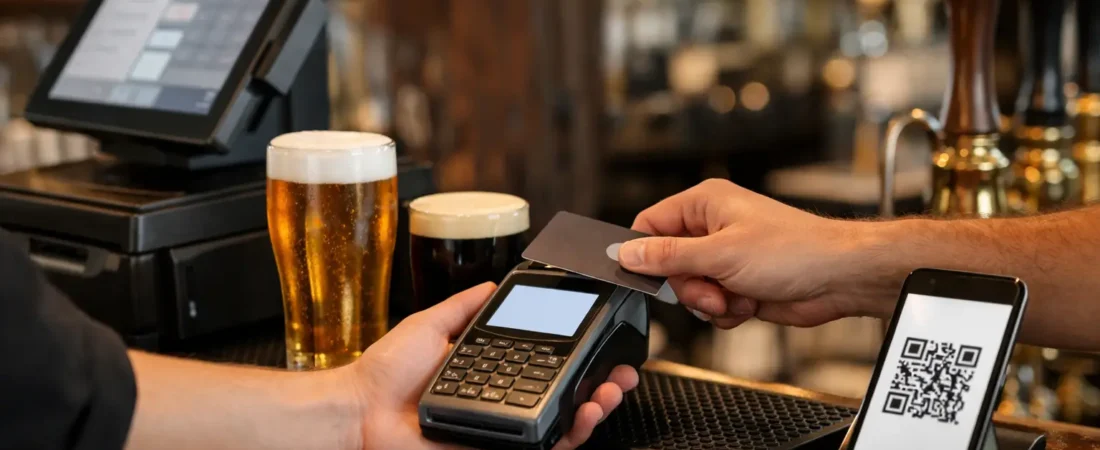
At the bar, contactless payments need to be quick and reliable. For table service, portable terminals can save staff from walking back and forth to a fixed till. If you serve food, an EPOS system can connect orders, tables, modifiers, and receipts so the bar and kitchen are working from the same information.
The right balance depends on your format. A wet-led village pub may only need a straightforward terminal and a simple cash register or POS setup. A food-led pub with several dining areas will usually benefit from a more complete EPOS system with handheld ordering, table management, and kitchen tickets. Neither approach is automatically right for every business.
Best payment solution for a pub: start with service flow
Before comparing providers or hardware, walk through a busy shift. Ask where delays happen and where mistakes are most likely. This often reveals whether you need an additional terminal, a better POS system, or a change to the way orders are taken.
Consider how customers normally pay. Do most order and pay at the bar? Are staff taking payments at tables? Do regulars run tabs? Do you take bookings for meals, private events, or accommodation? A pub with a large beer garden may need mobile card terminals with a dependable connection outdoors, while a small traditional pub may prioritize a compact counter setup.
It is also worth thinking about who uses the system. Seasonal staff and part-time team members need something intuitive. A payment setup that requires lengthy training can slow service and lead to avoidable errors when the pub is busy. Clear buttons, sensible menu layouts, and simple table or tab management matter more than a long list of features that no one uses.
Card terminals: fixed, portable, or both?
A countertop terminal works well where most transactions happen at one bar position. It is usually the simplest option for a compact pub with a predictable customer flow. However, it may be less practical if staff regularly take payment in a dining room, beer garden, or function area.
Portable terminals give more flexibility. Staff can take payment at the table, which can improve the customer experience and free up the bar during food service. They are particularly useful for pubs with outdoor seating or multiple rooms. The trade-off is that you need to consider battery charging, connectivity, and how many devices are needed for peak periods.
For many pubs, a combination works well: one terminal fixed at the main bar and one or more portable devices for tables and busy periods. This can reduce the risk of a single terminal becoming a bottleneck. It is not always necessary to buy several devices from day one, but it is useful to choose a system that can grow if trade increases.
Why EPOS can make a bigger difference than the terminal
A card reader takes payment. An EPOS system helps run the service. For pubs serving food, managing several tables, or handling a broad drinks menu, this distinction is significant.
A well-configured EPOS system can allow staff to open and transfer tabs, split bills, apply table numbers, send food orders to the kitchen, and track sales by product or category. It can also make end-of-day reconciliation less time-consuming because card, cash, and other payment totals are recorded in one place.
The value comes from setup, not just software. A menu needs to reflect how your team takes orders. Common modifiers such as cooking preferences, sides, or drink measures should be quick to find. Product buttons should be organized around the way staff think during service. If the screen is cluttered or the menu is poorly built, a feature-rich system can become slower than a simple till.
For a pub that only serves occasional snacks, a full hospitality POS system may be more than is needed. In that case, a simpler system with clear item sales and payment reporting can be the more sensible investment. The aim is to remove work, not introduce it.
Look beyond the transaction rate
Processing fees are a real operating cost, especially for pubs where card payments make up most transactions. But comparing rates alone can be misleading. The overall cost may include terminal purchase or rental, monthly software charges, extra device fees, payment processing rates, and charges for optional services.
Ask for pricing in a format that makes it easy to estimate monthly costs based on your own card turnover. A provider may be a better fit for one pub than another depending on average transaction value, monthly volume, and whether the business needs an EPOS subscription.
Also look at how quickly funds are available and how reporting works. Clear settlement information can make cash flow management easier, particularly after a busy weekend. Your accountant can advise on the wider financial treatment of payments and records, but your payment provider should at least make transaction data easy to understand and export when required.
Tabs, split bills, tips, and customer expectations
Small payment details can have a large impact on staff confidence and customer experience. Pub customers commonly ask to split a food bill, pay separately for rounds, add a tip, or leave a tab open. Your system should make these tasks simple and controlled.
For tabs, decide who can open them and what information is required. Some pubs use a name and table number, while others may use a card pre-authorization process. The appropriate approach depends on your service style and risk preferences. Make sure staff understand the procedure and that the process feels reasonable for regular customers.
Tipping should also be considered early. If you accept card tips, agree internally how they will be handled and communicated to staff. The terminal and POS system should support a clear process rather than creating awkward conversations at the point of payment.
Digital receipts, QR code ordering, and payment links can be useful in selected situations, such as events, table ordering, deposits, or takeaway food. They should solve a genuine problem. Adding every available payment method can confuse staff and customers if the core bar service is not already working well.
Reliability and support matter on a Saturday night
No payment system is immune to connectivity issues, hardware faults, or user error. What matters is how prepared your pub is when something goes wrong. Check whether terminals can use Wi-Fi and mobile data, whether there is a practical backup option, and what support is available if a device fails.
Local setup and ongoing help can be especially valuable for independent pubs that do not have an in-house IT team. Installation, menu configuration, staff training, and a sensible plan for busy trading periods can prevent many problems before they occur. It is worth asking what support looks like after the initial sale, not just during the demonstration.
A practical way to choose
Start by listing your busiest service periods, the places where payments are taken, and the frustrations your staff experience now. Then compare a small number of suitable options against those needs. Avoid paying for complex functions you will not use, but do not choose a basic terminal setup if it leaves staff manually managing tabs, kitchen orders, and daily totals.
If you run a pub in Dorset or the surrounding area and are reviewing your card payments or EPOS setup, Richard Bradley can provide a free, no-obligation payment review. A short conversation about how your pub actually trades can help identify a practical setup that supports faster service, clearer reporting, and room to grow.

Let’s Talk About Your Business
Hi, I’m Richard Bradley, your local SumUp Business Partner .
I help independent businesses across Dorset reduce card payment costs, choose the right card machines and EPOS systems, and receive honest, local advice.
Questions about this article? Looking to reduce your card payment costs? Book your free, no-obligation payment review today.
✓ Local Dorset Business Partner ✓ Free Payment Review ✓ No Obligation
Book Your Free Payment Review