A busy lunch service is not the time to discover that a paper order has been misread, a price has changed, or the card terminal is not tied to the till. That is why many owners ask, is cloud-based epos better? For an independent café, shop, pub, salon, or hotel, the answer is often yes – but only when the system matches the way the business actually works.
Cloud-based EPOS can bring payments, orders, stock, reporting, and customer information into one simpler setup. However, it is not automatically the right answer for every business. The useful question is whether it removes enough daily friction to justify the change.
Is cloud-based epos better for day-to-day service?
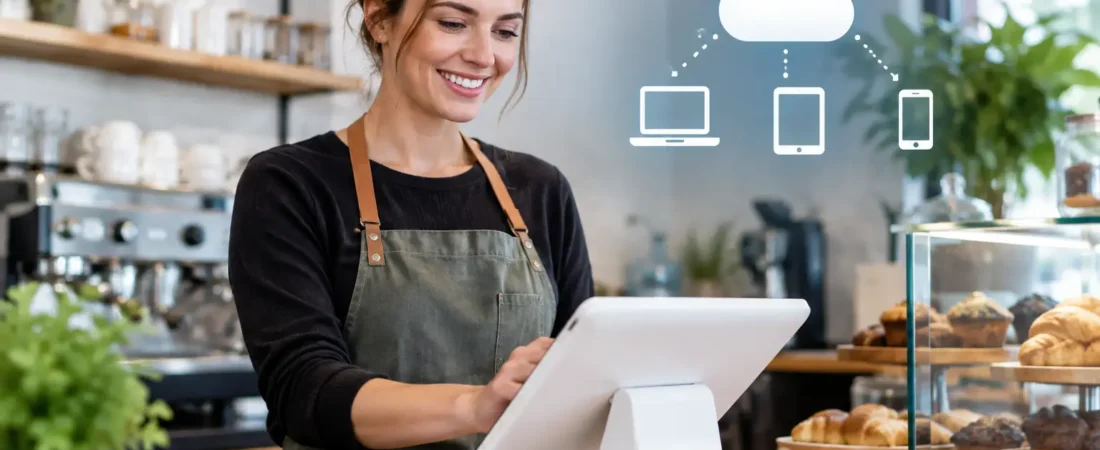
A cloud-based EPOS system stores key business data online rather than relying solely on one till or computer in the premises. Staff can still use a register, tablet, handheld device, or payment terminal at the counter, but sales and settings are synchronized through the internet.
In practical terms, this can make service quicker and reduce the small errors that take time to fix later. A restaurant team can send an order from a handheld device directly to the kitchen display or printer. A retail assistant can check an item’s price or availability without leaving the customer at the counter. A salon can take payment, record a sale, and review the day’s takings without writing figures into a separate spreadsheet.
The benefit is not the technology itself. It is fewer repeated steps. When orders, payments, and sales records are connected, staff do less manual entry and owners spend less time checking whether figures match.
For businesses with changing menus, seasonal products, multiple staff members, or more than one area of service, that can make a noticeable difference. A pub with table service, for example, may find that handheld ordering helps staff serve more tables without returning repeatedly to a fixed terminal.
Better reporting without waiting until closing time
One of the strongest reasons to consider cloud-based EPOS is visibility. Traditional setups can leave owners waiting until the end of the day, or even the end of the week, to understand what has sold. With a cloud-based system, reporting is normally available as sales happen.
That does not mean owners need to watch a dashboard all day. It means useful information is there when a decision needs to be made. You can see which products are selling, when trade is busiest, whether a promotion has worked, or which staff shift handled the most transactions.
For a coffee shop, this could reveal that a particular pastry sells out before noon while another creates unnecessary waste. For a boutique, it may show that a certain product line is popular but frequently runs out of stock. For a guest house, it can make it easier to separate bar, food, or retail sales.
Clearer reporting also helps when reviewing costs and planning staffing. It is not financial advice, but accurate sales information gives you a better starting point for conversations with your accountant or bookkeeper.
Is cloud-based epos better for taking payments?
It can be, especially when card payments and the point of sale work together. If a staff member enters a sale once and the payment amount is sent straight to the card terminal, there is less chance of typing the wrong figure into the machine.
That matters during busy periods. A customer sees the correct total, the payment is recorded against the sale, and staff can move on. It also makes refunds, end-of-day checks, and investigating discrepancies more straightforward.
Integrated payments can be particularly useful for businesses that take a mix of counter payments, table payments, deposits, payment links, and QR payments. Instead of treating each payment method as a separate process, the business can keep a clearer record of what has been paid and what remains outstanding.
Cash-flow visibility is another consideration. Some modern card payment arrangements offer same-day payouts, including weekends and bank holidays, subject to the provider’s terms. For independent businesses managing stock, wages, and regular bills, knowing when funds will arrive can be as valuable as knowing the card processing rate.
Where cloud-based EPOS may not be the better choice
The answer to is cloud-based epos better? depends on the scale and needs of the business. A simple mobile card terminal may be all a sole trader, market stall, or low-volume service business needs. Adding a full EPOS system would create cost and training requirements without solving a real problem.
It may also be less suitable if your internet connection is unreliable and there is no sensible backup plan. Many systems have offline functions, but the exact features vary. Before choosing a setup, ask what staff can still do if the connection drops, how payments are handled, and how sales synchronize afterward.
There is also a learning curve. A good system should be easy to use, but staff still need training on orders, refunds, discounts, voids, and closing procedures. If the system is set up around your actual menu, products, and workflow, training becomes much easier. If it is installed as a generic template, frustration tends to follow.
Finally, do not pay for features because they sound impressive. Stock control is valuable when you regularly manage stock. Table management is useful when customers are seated and served. Loyalty tools can encourage repeat visits when customers come back often. A business should choose the functions it will use, not the longest feature list.
What to check before changing your EPOS setup
Start with the bottleneck, not the device. Are queues building at the counter? Are staff writing orders twice? Do you struggle to see daily sales? Are card payments being entered manually? Is stock control taking too long? The answers point toward the features that matter.
Then consider how customers buy from you. A bakery may need fast counter sales and simple product buttons. A restaurant may need table plans, kitchen tickets, split bills, and handheld ordering. A salon may value service categories, staff sales reporting, and payment links for deposits. A retail shop may focus on barcode scanning, stock levels, and sales reports.
Ask these practical questions before committing:
- Can the setup accept payments in the places customers expect, including at the table or away from the counter?
- Will sales, refunds, and card payments reconcile clearly at the end of the day?
- Which reports will help you make decisions, rather than simply create more information?
- What happens if the internet connection fails or a device needs replacing?
- Who will install the system, train the team, and help when something changes?
The final question is often overlooked. A system is easier to adopt when someone has taken the time to understand your business, configure it properly, and remain available after installation.
A practical approach for independent businesses
For many small businesses, the right route is to begin with the essentials: integrated card payments, a straightforward register, clear sales reports, and a setup that staff can learn quickly. Additional tools such as kitchen displays, stock control, table management, customer loyalty, or accounting integration can be introduced when they solve a clear operational need.
This avoids replacing one complicated process with another. It also gives owners room to build a system around the business rather than forcing the business to fit a system.
A local review can be useful before making a decision. Richard Bradley at Dorset Business Hub can look at how you currently take orders and payments, discuss what is slowing the team down, and recommend an appropriate modern payment or EPOS setup. Support can include demonstrations, installation, staff training, and ongoing help after the system is in use.
If you are still asking is cloud-based epos better?, a no-obligation review of your current setup can turn the question into a practical decision. Contact Richard on 07377 625228 or use the Dorset Business Hub contact page to discuss what would genuinely make your working day easier.

Let’s Talk About Your Business
Hi, I’m Richard Bradley, your local SumUp Business Partner .
I help independent businesses across Dorset reduce card payment costs, choose the right card machines and EPOS systems, and receive honest, local advice.
Questions about this article? Looking to reduce your card payment costs? Book your free, no-obligation payment review today.
✓ Local Dorset Business Partner ✓ Free Payment Review ✓ No Obligation
Book Your Free Payment Review