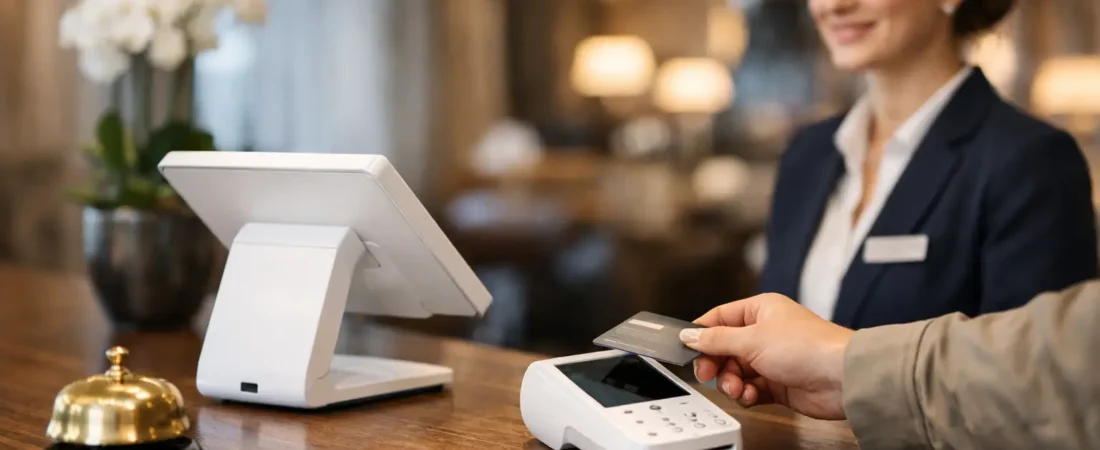
A guest arrives after a long journey, wants to check in quickly, and reaches for their card or phone. At that moment, hotel payment systems need to do more than take a transaction. They need to fit the way your property runs, whether you operate a small hotel, guest house, B&B, or serviced accommodation business with a busy front desk and a restaurant or bar.
For independent properties, the right setup can reduce time spent chasing payments, avoid manual-entry mistakes, and make it easier to see what has been paid, what is still due, and where sales are coming from. The right answer is not always the most feature-heavy system. It is the one that supports your daily operation without creating more work for staff.
What Hotel Payment Systems Need to Handle
A hotel takes payments differently from a typical shop. You may take a deposit months before a stay, collect a balance on arrival, add restaurant or bar charges during the visit, and process extras at checkout. There may also be no-shows, cancellations, group bookings, or guests who prefer to pay by payment link before they arrive.
This means a basic card terminal may be enough for a very small property with straightforward bookings, but it can become limiting as the business grows. A more connected payment and EPOS setup can help staff take payments accurately at each point of the guest journey.
The practical questions are simple. Can you take deposits easily? Can staff collect outstanding balances without rekeying figures? Can guests pay at the desk, at the table, or remotely? And can you review sales without piecing together information from several systems at the end of the week?
Hotel Payment Systems at Each Guest Stage
Looking at the guest journey is often the quickest way to identify where a payment setup is causing friction.
Before arrival
Deposits and advance payments help protect cash flow, especially around peak dates and longer stays. Payment links can be useful when a guest books by phone, email, or direct message. Instead of taking card details manually, you can send a secure request for payment and see when it has been completed.
This is also useful for corporate guests, group bookings, and accommodation packages. A clear payment process gives the guest confidence and gives your team a record of what has been requested and received.
Check-in and during the stay
At check-in, speed matters. A countertop terminal gives the front desk a fixed place to take payment, while a portable terminal can be helpful if reception is small, split across areas, or staff need flexibility.
If your property includes a breakfast room, bar, restaurant, or event space, handheld ordering and payment devices can reduce unnecessary trips back and forth. Staff can take an order and payment at the table, rather than writing it down and entering it later. That saves time during busy service and lowers the chance of a wrong room number, missed item, or duplicated entry.
Checkout and after departure
Checkout should not begin with a search for paper notes, handwritten tabs, or an uncertain balance. A clear record of payments and charges helps staff answer questions quickly and close the guest account with confidence.
After departure, reporting becomes just as valuable. You should be able to understand card sales by day, shift, staff member, or area of the business. If you operate accommodation alongside food and drink, separating these figures can show where revenue is building and where attention may be needed.
Choose the Setup Around Your Operation
There is no single system that suits every independent hotel. Start with how you accept bookings and how guests pay once they are on site.
A guest house with a handful of rooms may mainly need a reliable card terminal, payment links for deposits, and straightforward reporting. A boutique hotel with a bar and restaurant may benefit more from an integrated EPOS system, table management, kitchen printers or displays, and handheld payment devices. A property that hosts weddings or private functions may also need a clear way to take staged payments and track event sales separately.
It is worth mapping out your current process before comparing equipment. Write down where payments are taken, who enters amounts, where errors tend to happen, and how long end-of-day administration takes. This gives you a better basis for choosing equipment than focusing only on the terminal price or card rate.
A lower-cost standalone terminal may suit a simple operation. However, if staff repeatedly enter order totals by hand, the time and errors involved can outweigh the initial saving. Equally, a full EPOS setup may be unnecessary if it adds complexity to a quiet reception that only takes a few transactions each day. The aim is a proportionate setup that earns its place in the business.
Features That Make a Practical Difference
Features are only useful when they solve a real operational problem. For many properties, integrated card payments are valuable because the transaction total moves from the EPOS system to the card terminal automatically. Staff do not need to type the amount twice, which can reduce mistakes and make reconciliation easier.
Portable terminals are useful where the guest is not always standing at reception. They can support table payments in a dining area, payments at an outdoor terrace, or transactions during events. Contactless payments, digital wallets, and QR payment options can also give guests choice without slowing down service.
Stock control may matter if you run a bar, café, or restaurant. Even a simple view of popular products and stock movement can improve purchasing decisions and reduce last-minute shortages. Kitchen displays and printers can help separate front-of-house service from food preparation, particularly when breakfast, lunch, and evening meals overlap.
Customer loyalty is another consideration for properties with a regular local trade. A hotel bar or café may serve residents, visitors, and local customers. A simple loyalty offer can encourage repeat visits without requiring staff to manage paper stamp cards.
Reporting and Cash Flow Deserve Attention
Many business owners first look at card fees, and understandably so. Pricing matters. Yet it is equally important to consider how quickly you receive funds, how easily you can check transactions, and how much time the system saves in administration.
Clear sales reporting helps you identify patterns. You may find that Sunday lunch is stronger than expected, that bar sales rise after certain events, or that a particular menu item sells well but does not produce enough margin. Payment and EPOS data cannot make the decision for you, but it can provide a clearer starting point.
For businesses managing regular supplier costs, wages, and seasonal demand, payout timing also affects day-to-day planning. Same-day payouts, including weekends and bank holidays where available, can give owners a more current view of available funds. It is sensible to confirm the terms that apply to your chosen setup and make sure they fit your business needs.
Questions to Ask Before You Commit
Before changing your equipment, ask a potential provider or consultant how the setup will work in your actual property. Will it handle deposits and payment links? Can it support both reception and food service? What happens if the internet connection drops? How will refunds be handled? Can staff be trained quickly? And who will help if something needs changing after installation?
Also consider the guest experience. A payment process should feel clear and professional, but it should not force guests through unnecessary steps. For example, a compact guest house may prefer a straightforward terminal at the desk, while a busy hotel restaurant may gain more from table-side ordering and payment.
Local support can be particularly useful when you are changing a system during a busy season. An on-site demonstration allows you to test the equipment against your counter space, service flow, and staff routines before making a decision.
Getting Hotel Payment Systems Right Locally
The most useful hotel payment systems are not defined by how many features they contain. They are defined by whether they help your team serve guests faster, record sales accurately, and spend less time on manual administration.
Richard Bradley at Dorset Business Hub helps independent hotels, guest houses, and hospitality businesses across Dorset review their current payment and EPOS arrangements, choose an appropriate setup, and train staff to use it confidently. As a local SumUp Business Consultant, he can discuss card terminals, payment links, EPOS, handheld ordering, reporting, and other practical options without pressure.
If your current process involves rekeying totals, unclear reporting, or too much time at the end of the day, contact Dorset Business Hub through the contact page or call Richard on 07377 625228 for a friendly, no-obligation review. A few well-chosen changes can leave your staff with more time for the part of hospitality guests remember: being properly looked after.

Let’s Talk About Your Business
Hi, I’m Richard Bradley, your local SumUp Business Partner .
I help independent businesses across Dorset reduce card payment costs, choose the right card machines and EPOS systems, and receive honest, local advice.
Questions about this article? Looking to reduce your card payment costs? Book your free, no-obligation payment review today.
✓ Local Dorset Business Partner ✓ Free Payment Review ✓ No Obligation
Book Your Free Payment Review